From Elmina to Robben Island, Africa holds some of humanity’s most precious history.
The tourism money is real.
The uncomfortable question is how much of it ever reaches the monuments that earn it.
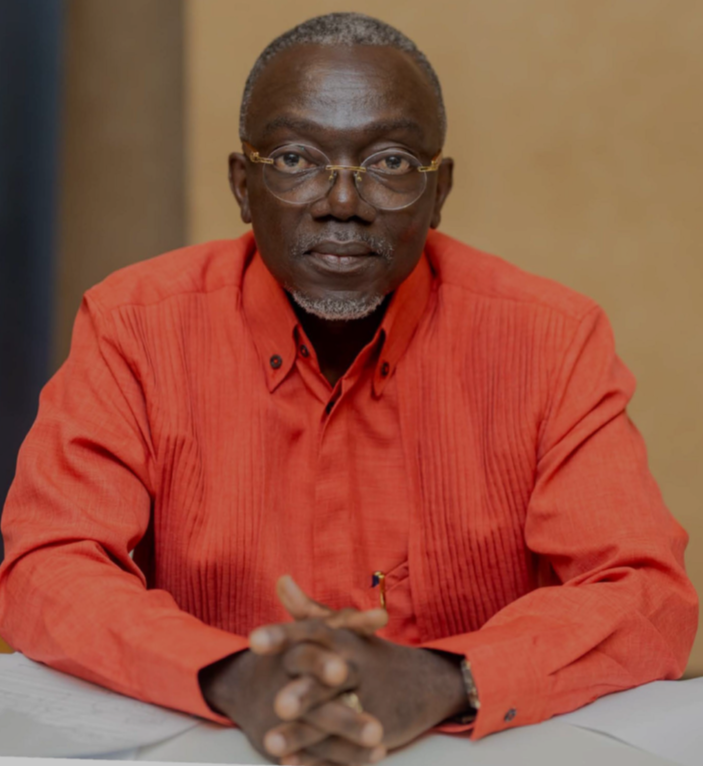
Douglas Boateng, Chartered Director UK | Chartered Engineer UK | Fellow, Institute of Directors UK | Fellow, Ghana Institution of Engineering | Governance, Industrialisation and Supply Chain Strategist | Founder, Boardroom Governance Summit | Founder and Scriber, NyansaKasa (Words of Wisdom) There is something quietly contradictory about a continent that holds some of humanity’s most extraordinary historical treasures yet so often struggles to maintain the places that preserve them.
Many of us have queued outside museums in London, Paris and Washington.
We have photographed Roman ruins, paid admission to walk through centuries of other people’s history, hired the guides, booked the hotels and bought the souvenirs.
Then we return home, where our own history sometimes waits behind a rusting gate, beneath a leaking roof or beside an abandoned visitor centre, and we wonder why tourism revenue remains below its potential.
Perhaps the problem is not that Africa lacks heritage.
Perhaps it is that we have not yet fully grasped the economic, educational and generational value of what we already possess.
NyansaKasa: “A nation that neglects its history may eventually discover that others understand the value of its past better than it does.” The World Will Pay To Understand Our History Ghana holds some of the most significant sites associated with the transatlantic slave trade.
Cape Coast Castle, Elmina Castle and the chain of coastal forts are not ordinary attractions.
They are places of profound human memory, binding Africa, the Americas, Europe and the Caribbean through one of history’s darkest chapters.
They deserve exceptional care, not because visitors pay to enter, but because we owe it to those who suffered within their walls.
Yet in May 2024, the Ghana Museums and Monuments Board acknowledged publicly that inadequate funding was undermining its ability to conserve artefacts and monuments and to run educational programmes.
That admission should concern every Ghanaian, particularly when set beside the wider tourism economy.
Ghana reported tourism receipts of about US$4.8 billion in 2024, and international arrivals reached 1.31 million in 2025.
Those figures cover all tourism, not heritage alone, but the money plainly exists.
The question is how much of it returns to the monuments that help draw visitors in the first place.
NyansaKasa: “A nation that celebrates tourism receipts while neglecting the monuments attracting visitors is quietly consuming its own future earnings.” Imagine instead a properly integrated heritage corridor linking Accra, Cape Coast, Elmina and Kumasi, with trained guides, thoughtful interpretation and reliable transport.
The visitor would no longer simply buy a ticket but enter an economy in which guides, hoteliers, craftsmen and conservators all earn, and the monument itself receives the funding it needs to survive.
Robben Island: Both The Opportunity And The Warning South Africa offers a telling illustration.
Robben Island, once a symbol of imprisonment and repression, is now a globally recognised place of remembrance and learning.
In the 2023/24 financial year, the museum recorded roughly 247,530 visitors and reported a surplus of R32.1 million.
Its management nevertheless warned that conservation funding remained insufficient, while ferry capacity and harsh weather continued to constrain operations.
The lesson is instructive.
Even a world-famous destination can struggle when operating revenue, infrastructure and conservation needs are not properly aligned.
Attracting visitors is only half the task; the other half is ensuring that the revenue they bring sustains the place they came to see.
The same question applies to every heritage authority on the continent: how much money is generated, how much is retained for conservation, and who is accountable for the difference? Following The Money In Ghana, responsibility is shared.
The Museums and Monuments Board is the principal custodian of national monuments, while the Ghana Tourism Authority administers tourism development under the Tourism Act of 2011.
That Act also established a Tourism Development Fund, financed largely through a 1 percent levy paid by patrons of specified tourism enterprises and intended for promotion, infrastructure and capacity building.
The existence of a fund, however, is not proof that heritage is adequately financed.
It is reasonable, and in the public interest, to ask how much the Fund collects each year, how much is disbursed, and what share reaches conservation rather than marketing or administration.
Such questions are not accusations.
They are the ordinary disciplines of good governance.
International support cannot fill the gap.
UNESCO’s World Heritage Fund has a budget of roughly US$7.3 million for 2026 to 2027, for the entire world.
Ghana’s own UNESCO profile records cumulative approved international assistance of about US$316,794 across 12 requests.
Recognition from abroad is welcome; responsibility remains at home.
NyansaKasa: “When money is collected....