Advertisement 1This advertisement has not loaded yet, but your article continues below.
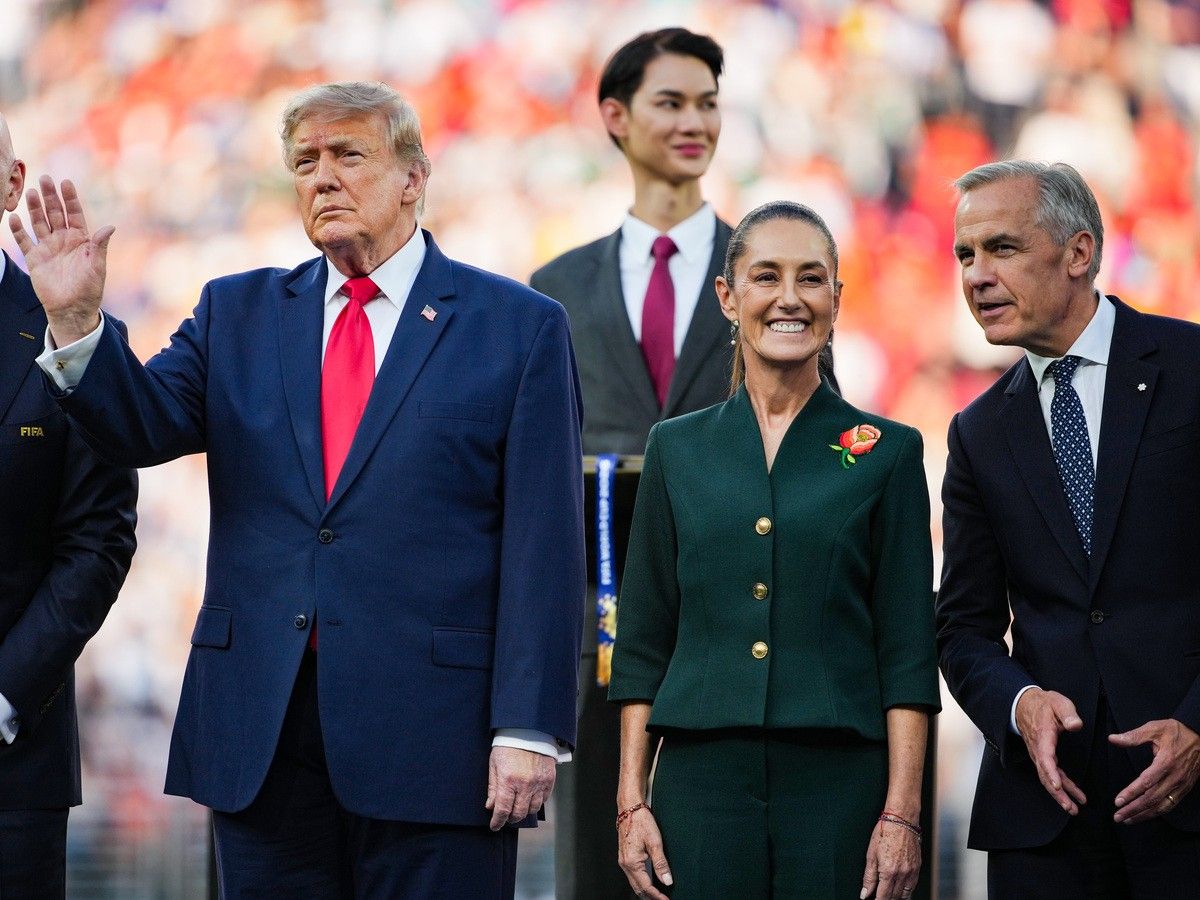
President Donald Trump, Mexican President Claudia Sheinbaum and Canadian Prime Minister Mark Carney during the awards ceremony after the FIFA World Cup 2026 Final at New York New Jersey Stadium on July 19, 2026 in East Rutherford, New Jersey.
Photo by Andrew Harnik /Getty ImagesArticle contentWASHINGTON, D.C.
— Washington is gearing up for next year’s review of the Canada-U.S.-Mexico Agreement, but signs of negotiating progress have come mainly from the U.S.-Mexico trade teams in recent weeks, while formal talks between the U.S.
and Canada remain stalled.Sign In or Create an Accountor View more offersArticle contentU.S.
Trade Representative Jamieson Greer says he speaks frequently with Canada-U.S.
Trade Minister Dominic LeBlanc, but there have been no formal meetings between the U.S.
and Canadian sides since talks collapsed in August.Article contentArticle contentAdvertisement 1Story continues belowThis advertisement has not loaded yet, but your article continues below.Article contentThe Mexican and U.S.
teams met for a round of formal talks in July and were supposed to meet again in September, but that has been postponed, likely until sometime this month.Article contentNP PostedGet a dash of perspective along with the trending news of the day in a very readable format.By signing up you consent to receive the above newsletter from Postmedia Network Inc.Thanks for signing up!A welcome email is on its way.
If you don't see it, please check your junk folder.The next issue of NP Posted will soon be in your inbox.We encountered an issue signing you up.
Please try againInterested in more newsletters? Browse here.Article contentMexico’s Economy Minister Marcelo Ebrard recently expressed optimism that new agreements are coming soon.
“We are getting closer on many issues, resolving problems, and we are making progress,” he said at last week’s G-20 meeting in Milwaukee, Wisc., after meeting with Greer.
“Every day we are closer to reaching new agreements.”Article contentWashington has opened public consultations for next year’s CUSMA review while maintaining bilateral engagement with Mexico — and not with Canada, which raises concerns about Ottawa’s ability to influence the process.
Experts say there is no reason for Canada to panic, but they also warn that a Mexican agreement could set terms that Washington later expects Ottawa to accept.Article contentMexico was seemingly on the back burner while Canada made progress in late summer, said Diego Marroquín Bitar, a fellow with the Americas Program at Washington’s CSIS.Article content“The Canadians made a lot of progress before negotiations collapsed,” he said.
“So they could jump back … to the negotiation table at any moment and be very close to where the Mexicans are actually.”Article contentAdvertisement 2Story continues belowThis advertisement has not loaded yet, but your article continues below.Article contentThe arrangement the U.S.
and Mexico are working toward centres on tariff relief and policy concessions, rather than a comprehensive rewrite of CUSMA.Article contentRead More Canada weathered the first tariff shocks.
But Deloitte sees trouble ahead Trump may be gearing up to blame Canada for GOP midterm losses Advertisement 1Story continues belowThis advertisement has not loaded yet, but your article continues below.Article contentMarroquín Bitar referred to it as a “skinny deal,” or a preliminary bilateral deal, that would give Mexico tariff relief in exchange for domestic-policy concessions and closer alignment with U.S.
trade policy toward non-market economies.Article contentThis could help prepare the ground for the 2027 CUSMA review, he said, but it’s not a final settlement or replacement for the trilateral agreement.Article contentCarlo Dade, director of international policy and the New North America Initiative at the School of Public Policy at the University of Calgary, agrees.Article content“Mexico can sign an agreement on reciprocal trade with the U.S.
to set a new tariff regime and to set a new economic security regime,” he said, noting that USTR calls them agreements on reciprocal trade.Article contentDade also rejects the notion that Canada is being left out, noting that not every communication is shared with the public.Article content“I wouldn’t read this as necessarily being sidelined,” he said.Advertisement 1This advertisement has not loaded yet.Trending Subscriber only.
John Ivison: Mark Carney's principled stand appears to be only on one leg Subscriber only NP Comment How a Mexico-U.S.
trade deal could set the terms for Canada News Advertisement 2Story continues belowThis advertisement has not loaded yet, but your article continues below.
Violent incidents caught on camera during anti-Israel protests in Toronto and Montreal News Chris Selley: Olivia Chow's goose is begging to....