The German government has launched an international initiative to curb emissions of sulfur hexafluoride, an exceptionally potent greenhouse gas that it says has long been overlooked in efforts to address climate change.
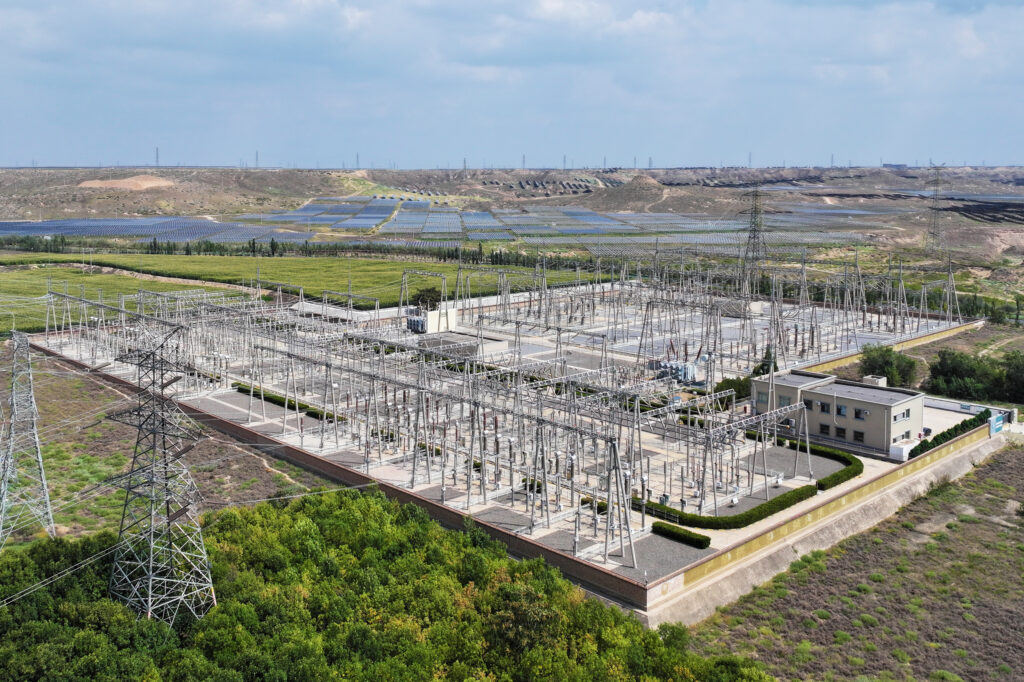
Announced this week at a United Nations Environment Program meeting in Kigali, Rwanda, the “Global SF6 Pledge” urges countries to commit to monitoring, reporting and reducing emissions of the synthetic gas from the electric power sector, where it is used as an insulator in high-voltage equipment.
Pound for pound, SF6 is 24,300 times more effective at warming Earth’s atmosphere than carbon dioxide and remains in the atmosphere for 1,000 years.
Although the United Nations identified it as one of six key greenhouse gases in the 1990s, it has received relatively little attention from policymakers.
“It’s a gap,” said Philippe Lempp of Germany’s international development agency, which is implementing the pledge.
“We need to take care of this one because it’s something that we cannot rely on countries to do themselves.” More than half of all sulfur hexafluoride emitted globally comes from China, a country that is rapidly expanding its electric grid.
The country’s state-owned electric power companies recycle only about 30 percent of the gas they discard each year, with the remainder likely released into the atmosphere, a recent Inside Climate News analysis concluded.
“The pledge finally turns the spotlight on SF6, but until the world’s largest grid builder matches that ambition, we’re only treating half the leak,” said Richard Ferris, senior counsel at the Institute for Governance and Sustainable Development, a Washington, D.C.-based environmental research and advocacy organization.
China’s central government released its National Climate Change Response Plan in July, which called for an SF6 management plan to reduce emissions of the pollutant.
The pledge and the attention it brings could hasten China’s efforts, Ferris said.
“China will continue to work with all countries to strengthen international cooperation on climate change, contributing to a green transition and the sustainable development of humanity,” Liu Chang, spokesperson for the....