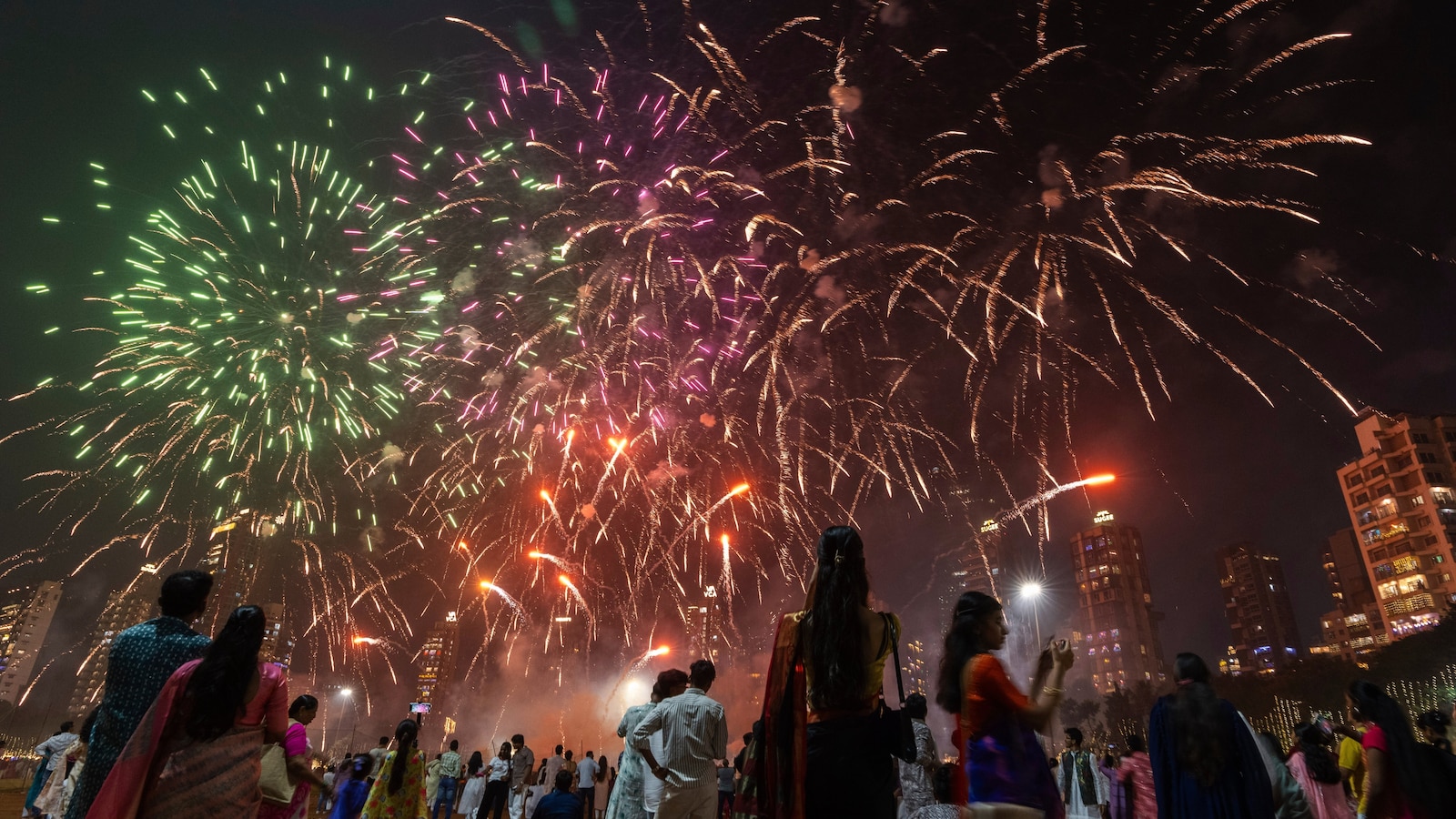
BENGALURU, India -- For people across South Asia, especially in northern India, Diwali celebrations coincide with the return of hazardous winter air, raising concerns about how to celebrate safely.
Winter also brings severe smog to parts of Pakistan and China, where warmer air can act as a lid, trapping colder air and pollution near the ground.
In eastern Europe, burning coal and wood to heat homes also adds to winter pollution.
Western Hemisphere countries, meanwhile, face their own seasonal air-quality problems, as summer wildfires send smoke across vast areas of the United States and Canada.
Experts say no matter where you live or when you face pollution, simple steps such as checking the air quality index, wearing a well-fitting mask and using air purifiers can reduce exposure to harmful pollutants.
An estimated 1 billion people worldwide celebrate Diwali, a holiday of Hindus and Jains with ties to ancient epics such as the Ramayana.
Fireworks traditionally set off during the holiday, which starts Sunday, can make polluted air more dangerous.
As Diwali approaches, here are ways to reduce exposure to polluted air.
Fireworks add a sharp burst of pollution to a much bigger problem.
Across India, Pakistan and other parts of South Asia, traffic, factories, dust from construction and burning of crop residues and waste foul the air.
Weak winds and stagnant winter air allow that pollution to build up.
“Poor air quality is our all-year-round problem in our country,” said Shweta Narayan, a public health expert at the Global Climate and Health Alliance.
Narayan said firecrackers add to the problem.
India’s air quality index turns pollution measurements into a health warning.
AQI readings of 201–300 mean “poor,” 301–400 “very poor” and 401–500 “severe.” Severe levels can harm even healthy people.
Check pollution levels on government or privately run websites before heading outdoors.
Look for data from a nearby monitoring station and the time of its last update.
A citywide average can conceal a polluted neighborhood.
The problem is especially bad in Delhi, where fine particle pollution averaged about 19 times the World Health Organization’s annual guideline last year.
Air pollution monitors have reached the maximum reading they can display multiple times in recent years.
City authorities have responded with temporary construction, industrial and vehicle restrictions.
Public health experts said such measures often fail to address the root causes.
The city of more than 20 million people is also implementing a long-term plan to promote use of electric vehicles.
Arvind Kumar, a chest surgeon at Medanta hospital near Delhi and founder trustee of the Lung Care Foundation, recommends using properly fitted N95 or N99 masks outdoors during periods of heavy pollution.
These masks are available at pharmacies, hardware stores and online....