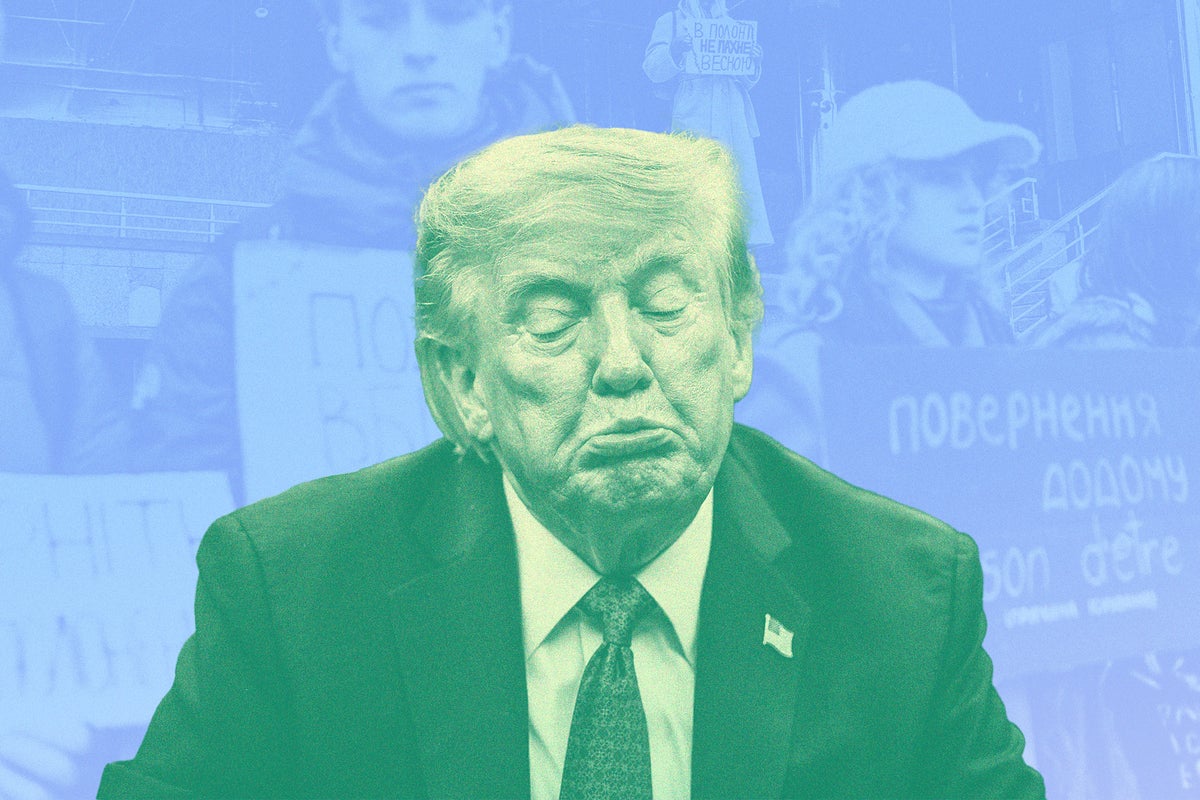
It’s been a rough week for Ukraine, less because of anything happening on the battlefield and more because Donald Trump’s hot-and-cold relationship with the embattled country has once again gone frigid.
Last Friday, Trump announced a plan to import millions of barrels of Russian diesel, which has been under U.S.
sanctions since shortly after Russia started the war with Ukraine.
Trump savaged his Ukrainian counterpart, Volodymyr Zelensky, over the weekend, saying, “I think it’s time for Ukraine to get a new president.” And this week, according to Reuters, the White House temporarily limited Ukraine’s access to a SpaceX-made satellite system it uses for battlefield communications.
Those developments have understandably sent people who care about Ukraine’s future spiraling, convinced that the ostensible leader of the free world has shown his true cards.
Buying Russian diesel would effectively subsidize Vladimir Putin’s war effort (even as U.S.
taxpayers are already helping arm Ukraine).
Ukraine’s satellite access seems to be coming back, but the interruption foiled attacks and cost Ukraine military drones.
Zelensky appears to be losing patience, too, expressing betrayal after Trump demanded Ukraine stop attacking Russian energy infrastructure even as Russia continued to attack Ukraine’s.
Seen in the context of Trump’s long-standing admiration for Putin, it’s hard to conclude that these developments are anything but bad for Ukraine.
But is Trump’s turnabout permanent? At the risk of sounding like a contrarian, the truth is that he has waffled over the war more often than not.
In some moments, like when he accused Zelensky of being insufficiently grateful for U.S.
support last year, Trump has taken Putin’s side.
But begrudgingly or not, Trump has also meaningfully helped Ukraine by agreeing to let it manufacture American weapon systems and by joining Europe in levying more sanctions against Russia over the summer.
One reason Trump’s latest pivot against Ukraine might not last is that his diesel deal looks more like an act of desperation than a lasting strategic shift.
As we’ve explained before, Trump is scrambling to lower U.S.
gas prices, which his war of choice in Iran has elevated, ahead of the midterm elections.
Despite his claim that prices “will be COMING DOWN, IN RECORD NUMBERS, AND FAST!,” the deal probably won’t do much to alleviate Americans’ pain at the pump before Election Day.
But getting caught trying rarely hurts, and even small decreases could be enough to save endangered Republican candidates, who can use all the help they can get.
Trump approaches international relations in personalist terms (he often describes foreign leaders as his friends, even when they aren’t), so his pivot back to bashing Zelensky is arguably a more worrying development.