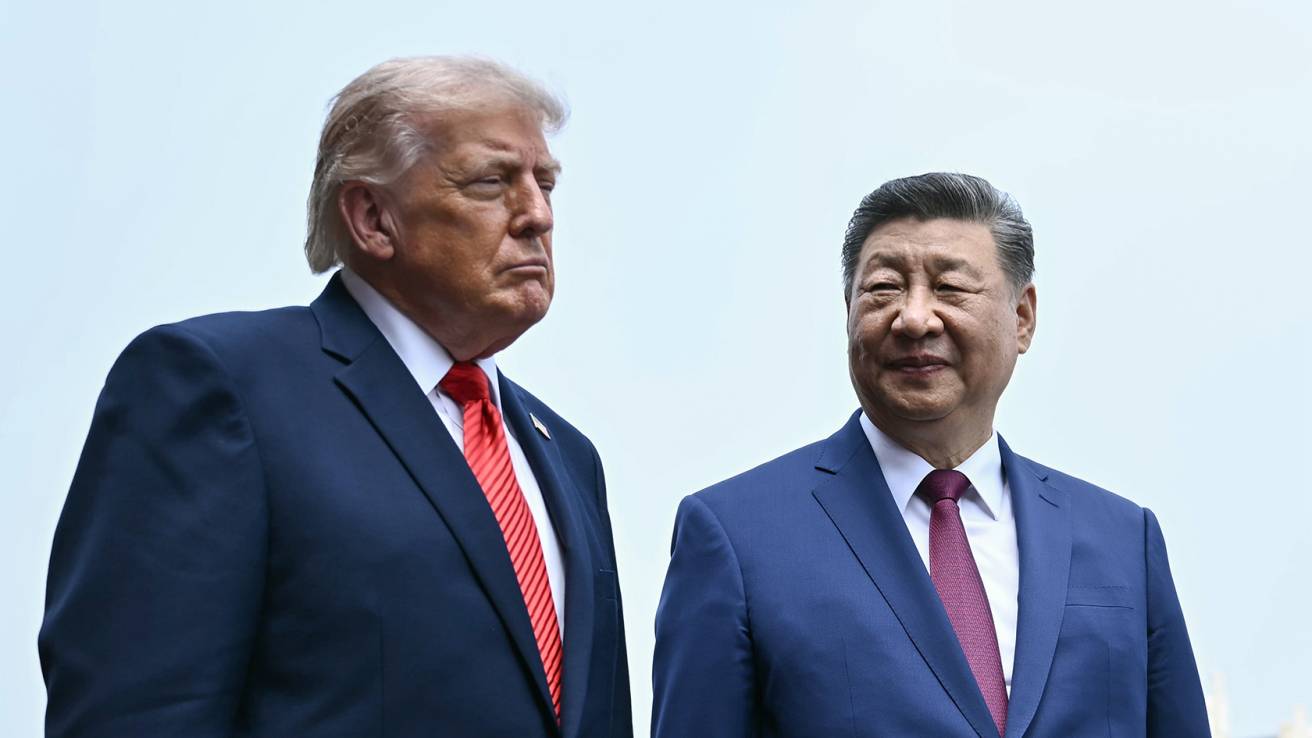
When Presidents Donald Trump and Xi Jinping last sat down in May 2026, talk was centred on three Ts: trade, technology and Taiwan.
The latest summit, due to begin in the United States on September 24, looks set to focus on the same set of issues again.
The main difference will be that the technology element has been given added urgency by the sudden and rapid shift in developments in artificial intelligence.
What’s less clear is whether the two sides will be able to come to any sort of transformative agreement on that, or any other issue.
Tweaks to trade? The most urgent issue, but also the simplest to solve, will be on trade.
Nearly a year ago at Busan in South Korea, Trump and Xi hammered out an agreement whereby the US agreed to lift some export controls on high-end technology and to reduce the then three-figure tariffs on Chinese goods.
For its part, China agreed not to restrict the flow of critical minerals and rare earths to US users.
That pact is now up for renewal.
Both sides are likely to want a continuation of the current arrangement, and while there may be some tweaking on the side, the new deal will probably be similar to the old one.
Each side has proposed in previous meetings that there should be a new instrument, a Board of Trade, that will assess non-sensitive U.S.-China business interests.
However, details about the institution remain vague.
Some announcements are likely during the summit, but business leaders will want to know how comprehensive and lasting the arrangements for the board will be.
There is still less information on a proposed Board of Investment, which remains on the drawing board.
The Chinese side has proposed bringing major Chinese CEOs to the summit to match the likes of Nvidia’s Jensen Huang and Tesla’s Elon Musk, both of whom accompanied Trump on the Beijing trip.
But the choice of business leaders is likely to turn on which aspects of trade China thinks are likely to develop most effectively in the short term.
The always thorny issue of Taiwan Taiwan is a much harder issue to solve, but it’s unlikely that much that is discussed on Xi’s visit will determine its outcome.
Trump has been less willing than his predecessor to commit the US to defending the island should Beijing invade, instead reasserting Washington’s long-held position of strategic ambiguity.
And although the US is currently distracted from East Asia by the Iran conflict, China still prefers to find methods short of war to bring the island under Beijing’s control.
The island’s January 2028 presidential election is likely to be a more crucial moment for Taiwan’s future, particularly if the opposition — and more China-friendly — Kuomintang party wins the presidency, or indeed if an isolationist candidate becomes US president later that year.
If the next president opted to change course by taking a less active involvement in overseas issues — as has been floated by early contenders on both the left and right — that would change things all the more.
For now, Beijing will continue to build the People’s Liberation Army’s naval capacity to have the option of military action against the island.
But its preference will be to take advantage of changes within Taiwan’s internal politics while combining economic incentives and coercion, squeezing....


