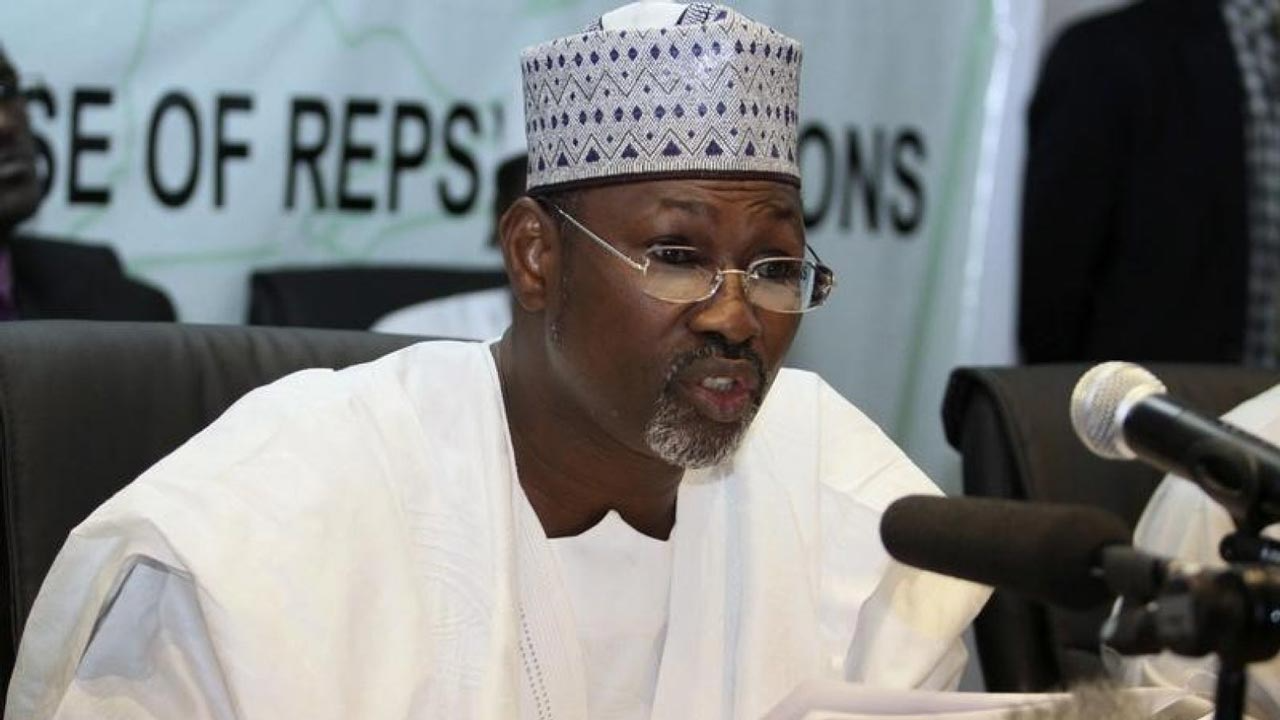
A former chairman of the Independent National Electoral Commission (INEC), Prof.
Attahiru Jega, and Catholic Bishop of Sokoto, Dr Matthew Hassan Kukah, have said Nigeria’s development has been stalled by prolonged bad leadership and a flawed moral foundation.
They spoke at the Nasarawa State 30th anniversary lecture marking the creation of the state on 1st October, 1996, in Lafia.
Jega delivered the keynote address titled, “Nasarawa State at 30: From Foundation to Transformation,” while Kukah spoke on “Unity in Diversity: Three Decades of Building a Cohesive Nasarawa State.” Jega said Nigeria has suffered “the tragic misfortune of being bedevilled by bad leadership” in two phases — prolonged military authoritarian rule that was undemocratic and without consultation, and civilian rule since 1999, which raised high hopes but has left many citizens, especially youths, disillusioned by poverty, unemployment and doubts over electoral integrity.
Using Nasarawa as a case study, Jega said the state, one of the six created by the late head of state, Gen.
Sani Abacha, started with the least.
Quoting former Governor Abdullahi Adamu, he said at creation it had “one tarred road, no water board, and no secretariat,” with an estimated population of 1.5 million and 3.7 per cent IGR contribution in 1997.
Thirty years later, he said, the state now has about 3.3 million people, 11 per cent IGR, and growth across sectors.
Public primary schools rose from 1,402 to over 2,100, secondary schools from about 150 to 490, tertiary institutions from 2 with 2,500 students to 18 with over 60,000 students, primary healthcare centres from 150 to 895, and tarred roads from 200-300km to 1,500km, with 639km in the last seven years.
On living standards, he cited World Bank, NBS and UNDP surveys showing poverty dropping from 70 per cent in 1996 to 62 per cent in 2026, with official NBS 2022 data putting Nasarawa at about 57 per cent, while multidimensional poverty remained at 79.8 per cent.
Pipe-borne water coverage moved from 5-8 per cent at creation to 29 per cent urban coverage, while female school enrolment rose from 68,000 to 333,000.
Jega described Governor Abdullahi Sule’s seven-year administration as “a significant ray of hope” and transformational, citing investments in urban renewal, health, agriculture, education, industrialisation, and mining, noting that, if sustained, Nasarawa could become “the state to beat.” Kukah, in his presentation, said managing diversity remains Nigeria’s greatest failure.
Citing the encounter between Dr Nnamdi Azikiwe, who said “let us forget our differences,” and Sir Ahmadu Bello, who said “let us understand our differences,” Kukah said Nigeria has done neither after 66 years of independence.
He anchored his lecture on Chapter Two....