The new Spanish Civil War film La Bola Negra feels difficult to separate from the present.
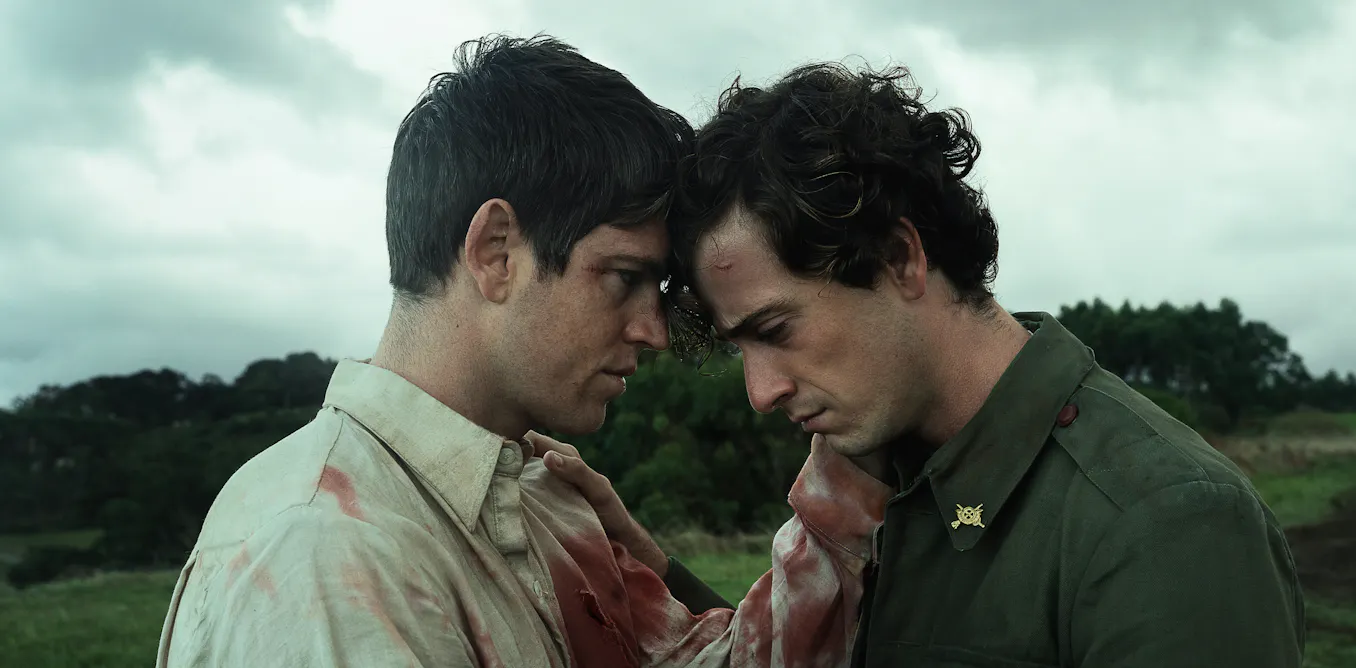
Set across 1932, 1937 and 2017, La Bola Negra follows three gay men whose lives become connected across generations: a young man facing exclusion because of his sexuality; a soldier who forms a forbidden bond with a Republican prisoner during the civil war; and a historian uncovering a buried family history.
Their stories gradually converge around an unfinished play by Federico García Lorca and the lives that history tried to erase.
The film explores what a nation chooses to remember, whose lives are given a place within that history, and what happens when freedoms once assumed secure can no longer be taken for granted.
As political movements around the world again contest sexuality and who has a place within the nation, those questions no longer feel safely confined to the past.
Lorca’s queer life Lorca, one of 20th century Spain’s leading poets and playwrights, was murdered in 1936, weeks after the civil war began.
His death made him one of the war’s most enduring symbols, while his homosexuality was long marginalised in accounts of his life.
At his death, Lorca left four pages of an unfinished play called La Bola Negra (The Black Ball), which he intended to centre on a young man rejected from a Granada social club for being gay.
Directors Javier Calvo and Javier Ambrossi draw on that fragment to create three linked stories, showing how political repression passes between generations.
In 1932, it appears as social exclusion.
During the civil war, it becomes imprisonment and the threat of death.
By 2017, it survives through family silence and buried histories.
The film suggests repression does not simply disappear.
It changes form, while leaving traces that later generations are forced to confront.
Remembering the Spanish Civil War The Spanish Civil War began in 1936 after a military uprising against Spain’s elected Republican government.
General Francisco Franco led the Nationalist forces, backed by Nazi Germany and fascist Italy, to victory in 1939.
He ruled Spain as a dictator until his death in 1975.
His regime repressed political opponents, persecuted queer people and made its version of the war the official account.
After Franco’s death, Spain’s transition to democracy was widely praised as a political success.
But the violence of the civil war and dictatorship was largely left unresolved.
The “pact....