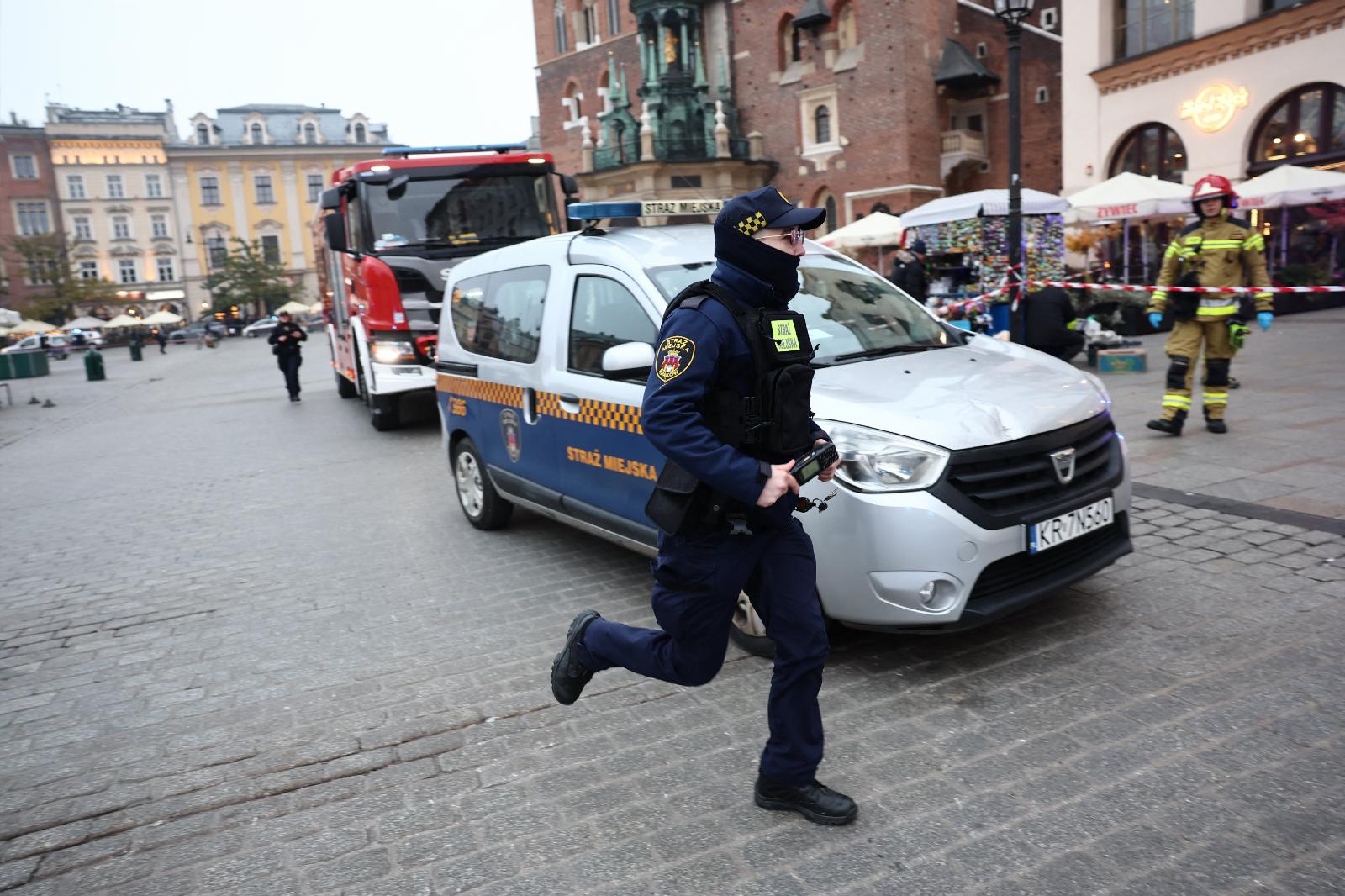
Young people are taking to the streets across France, Italy, Belgium, India, Serbia, and Albania, refusing to surrender their futures to a capitalist system that has abandoned them or to a politics that Naomi Klein and Astra Taylor have described as “end times fascism.” These protests are fueled by mounting anger over deteriorating schools, economic insecurity, unaffordable housing, political corruption, and a ruling class increasingly indifferent to the needs and voices of the young.
As far right governments in Europe, the United States, and Latin America cancel out a future plagued by endless wars, climate catastrophe, staggering inequality, deepening poverty, and deteriorating public institutions, young people are rethinking the language of politics, resistance, and hope.
A 21-year-old student protesting in Milan captured this spirit of resistance in an interview with Reuters, declaring: “It’s vital to take part in people’s spontaneous movements born from an explosion of rage that made collective action possible.” She added, “I think the worst damage this ruling class has done to my generation is stealing even the ability to imagine a future, to dream.” Rather than address these grievances, governments have increasingly responded with curfews, protest bans, and brutal police repression, treating the democratic aspirations of young people as threats to be crushed rather than demands for justice to be heard.
These uprisings are driven by more than economic grievances.
They express a growing refusal to accept the moral and political cruelty of a system that has declared the young disposable.
At their core is a recognition that neoliberal capitalism has robbed an entire generation of the promise of a better future and that austerity is class warfare disguised as economic necessity.
As reported in Rolling Stone, Mathys Le Coz Ndzié, a 17-year-old Parisian student, noted: “The current government hasn’t managed to give us a clear picture of the future, or the world we’re heading into.
So we feel completely lost.
… We haven’t been prepared for the world that’s coming.
The one they’ve prepared us for no longer exists.” This war on youth is intensified by the destruction of social protections and the rise of governments that increasingly rely on surveillance, criminalization, and police repression to enforce obedience, especially among the poor and racially marginalized.
Yet out of these conditions of abandonment and repression, something more profound is emerging: a moral and political awakening rooted in the struggle for economic justice and a collective refusal to accept a world in which human dignity is sacrificed to private profit, democracy is hollowed out, and the very possibility of imagining and creating a different future is stolen from an entire generation.
Carlotta Magoga, writing in European Democracy Hub, is right in stating that, “From Serbia to Bangladesh and Senegal, young people are becoming a driving force for a more democratic world.
… In search of alternative routes, they are developing new forms of civic engagement — through artistic protest, online campaigns and storytelling — and rewriting the rules of political participation.” Through their courageous presence in the streets, they are fashioning a form of activism “as a way to rethink how democracy works.” For example, in France, students have challenged overcrowded classrooms, teacher shortages, and a university admissions system that reinforces class inequality.
In Italy, students have joined workers in protests over low wages, unaffordable housing, deteriorating public services, and increased military spending.
In Genoa, port workers and students have also protested the use of ports for arms shipments.
In Serbia, where opposition to government corruption has been central, students have demanded investigations into public contracts, government spending, and the political control of public institutions.
These movements do not all embrace an explicitly anti-capitalist agenda, but their demands expose conflicts over who controls public resources, whose interests governments serve, and how economic and political power is organized and maintained.
Capitalism, in one of its more disingenuous moments, celebrates youth rhetorically as the future but denies youth the resources to have a future.
What governments fear about these revolts is that students are moving beyond demands to make capitalism more humane.
Protests across Europe and beyond are challenging gangster capitalism as a political order marked by corruption, neoliberal austerity, authoritarianism, militarism, racism, and the concentration of wealth and political power in the hands of a financial elite.
At the heart of this confrontation is a struggle over the moral and political values that will govern society and determine the fate of future generations.
Two radically opposed moral visions are confronting one another on the world stage.
One is rooted in solidarity, justice, and democratic possibility; the other in greed, racial hatred, organized brutality, and authoritarian domination.
What is at stake is the future of democracy and whether coming generations will inherit a world governed by human dignity or one surrendered to the cruelty of the powerful.
This culture of moral depravity finds one of its most revealing expressions in the U.S.
billionaire class, where technological achievement is increasingly invoked to excuse political and moral cruelty.
In an October 20 article in The Dispatch, Marian L.
Tupy asks: “Is Elon Musk Worth the Trouble?” His defense of Musk turns technological achievement into a moral alibi for authoritarian politics, reducing the suffering produced by the exercise of billionaire power to an unfortunate price of technological progress.
Missing from this calculus is any serious reckoning with Musk’s role in dismantling USAID, an assault on humanitarian assistance associated with catastrophic human suffering and potentially hundreds of thousands of deaths.
Tupy’s invocation of Henry Ford is equally revealing.
Ford’s antisemitism is reduced to an unfortunate character flaw, conveniently excused in the gratuitous celebration of industrial progress.
This is the poisonous morality of gangster capitalism: technological progress divorced from justice, human suffering reduced to an acceptable cost, and billionaires shielded from moral accountability.
The victims disappear while their powerful tormentors are celebrated.
This is the moral rot of a political and economic order inhabited by the living dead, a world in which wealth and power can shield predators from accountability.
The crimes of Jeffrey Epstein, who preyed on and trafficked underage girls for sexual exploitation, offer a chilling illustration of this culture of impunity.
In this world of rapacious political zombies, wealth becomes a shield against accountability, and the victims of predatory power are condemned to silence.
This culture of cruelty and unapologetic viciousness also reaches into electoral politics.
Ohio gubernatorial candidate Vivek Ramaswamy’s campaign released an ad featuring the estranged mother of his Democratic opponent, physician Amy Acton, denouncing her daughter as a liar.
Acton has publicly described being removed from her mother’s custody at age 12 following sexual abuse by her stepfather.
Her mother reportedly remained married to the accused man.
Ramaswamy’s weaponization of Acton’s childhood suffering for political advantage reveals a political culture in which private trauma becomes electoral ammunition and cruelty becomes a badge of political power.
This politics of dehumanization is also evident in the racist rhetoric surrounding the November elections.
At a campaign event in Michigan, Robert F.
declared: “There’s 500 million Arabs in the world, and yet they don’t produce....