Two men sit on top of a hill at the end of a narrow road in Johannesburg ’s industrial suburb of Kya Sands.
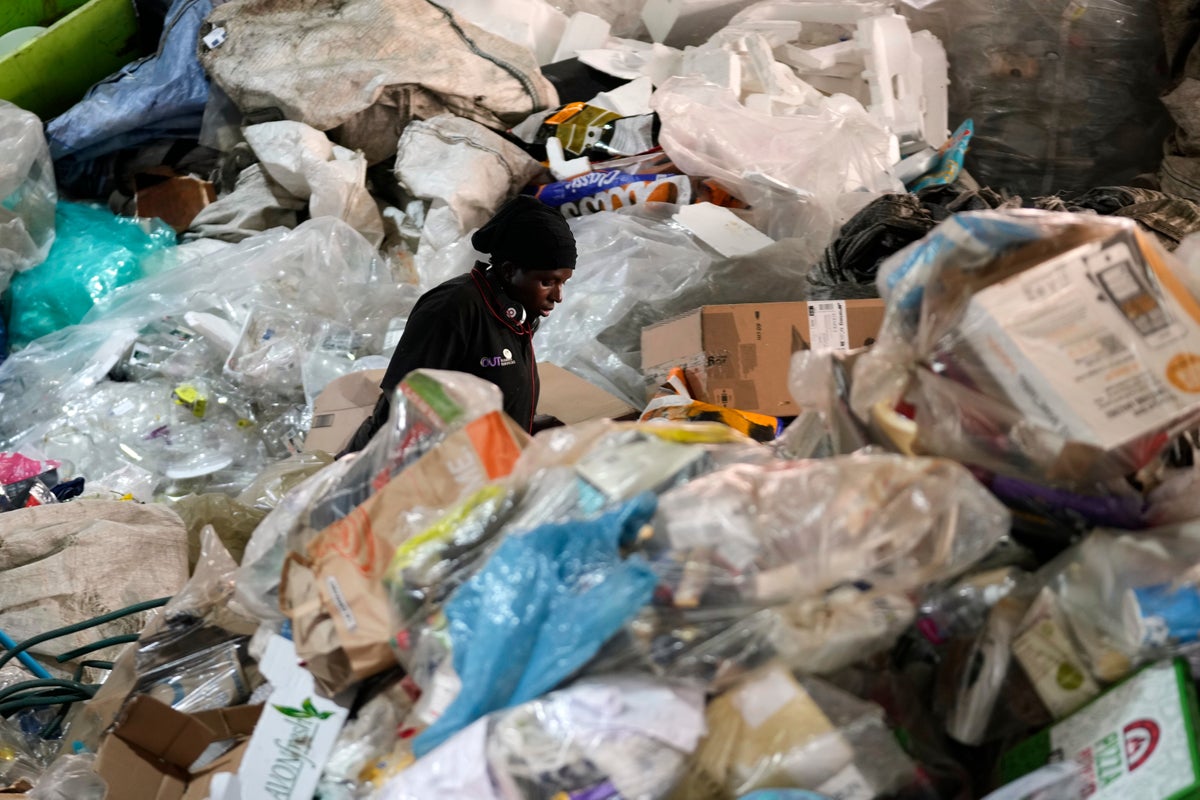
But the hill is no natural feature — it is a mountain of illegally dumped trash, piled so high it now swallows the road beyond.
“When I started as a ward councilor in 2021, this mountain was very small.
I could even drive my vehicle down this road,” municipal councilor Devon Steenkamp told The Associated Press.
“It’s now quite a high, big mountain; there are always constant fumes.” The mound is only the edge of a dumpsite that mushroomed after the municipal landfill reached capacity and closed in 2010.
Adjacent to it, waves of waste spread across a valley as smoke rises and trucks unload more trash.
Johannesburg’s mounting waste problem reflects a broader challenge across Africa.
Rapidly growing cities, including Lagos, Dakar, and Accra, are generating waste far faster than many municipalities can collect, recycle, or safely dispose of it.
Africa’s urban population is projected to double by 2050 to 1.4 billion people, according to a joint report last year by the OECD, African Development Bank, Cities Alliance and United Cities and Local Governments of Africa.
The United Nations Environment Program estimates that more than 90% of waste generated in Africa is disposed of at uncontrolled dumpsites and landfills, often with associated open burning.
The World Bank projects that waste generation in sub-Saharan Africa will increase by 124% between now and 2050 — the fastest growth of any region.
Over 2,000 illegal dumping hot spots In Johannesburg's densely populated Alexandra township, goats forage through piles of household waste as residents navigate sidewalks strewn with plastic, food scraps, and construction debris.
Local resident Linda Makole, 75, is especially concerned about children, many of whom live in one-room homes and rely on sidewalks and a few parks for space to play.
“Small children can’t possibly be healthy living in this environment,” Makole told the AP.
“Weekly, my landlord takes all his tenants’ garbage in a van and goes to dispose of it,” she said.
“I don’t know where he dumps it.” Pikitup, the city’s waste company, has identified more than 2,000 illegal dumping hot spots and allocated 115 million rand ($6.4 million) in 2025/26 to tackle the problem.
Some residents said their garbage went uncollected for up to four weeks.
The Johannesburg Crisis Alliance has blamed the disruptions on labor disputes, financial constraints, and an aging fleet.
Unreliable waste collection has driven demand for informal waste....